Who Was Afraid of Cinema of Intervention?
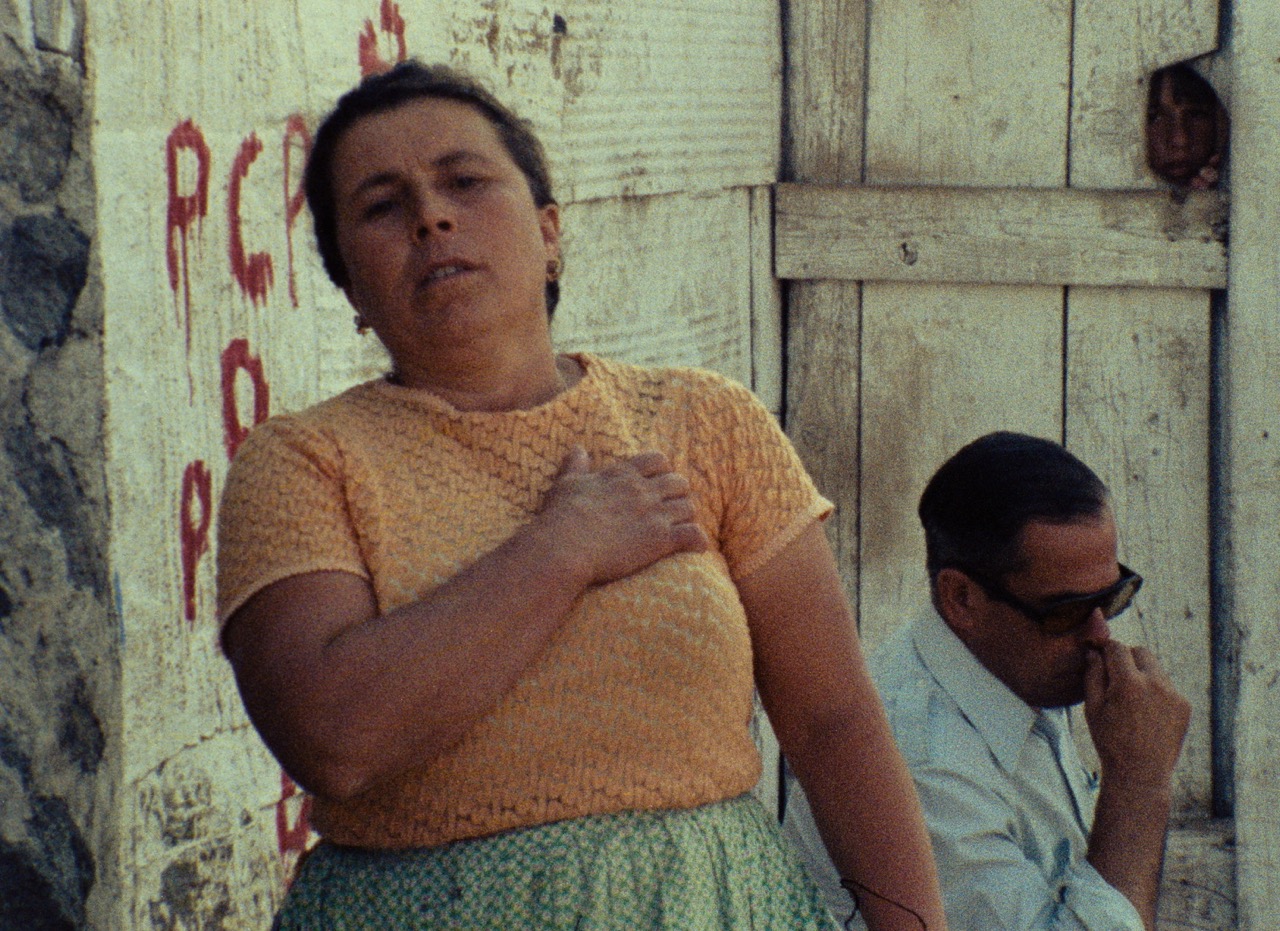
Still from Barronhos: Quem Teve Medo do Poder Popular? (Luís Filipe Rocha, 1976), courtesy of Cinemateca Portuguesa
In May 1976, the Mostra Internacional de Cinema de Intervenção brought together more than 150 militant films from around the world in revolutionary Portugal. Despite being one of the first international gatherings entirely dedicated to militant cinema in Europe, only scant traces remain of it.
Two films which were part of the Mostra’s programme offer entry points to specific aspects of the historical event: The shift from representation to self-representation, the use of reenactment as a formal strategy, and the capacity of cinema to intervene in oppression and its structural causes – many of which persist to this day.
21 April 2026, 18:30 & 20:30
Kino Xenix, Kanzleistrasse 52, 8004 Zurich
18:30
Barronhos: Quem Teve Medo do Poder Popular?
(Barronhos: Who Was Afraid of People’s Power?)
Luís Filipe Rocha, Portugal, 1976, 53′, Portuguese w/ English subtitles
Barronhos departs from the homicide of a member of the neighborhood committee in a slum on the outskirts of Lisbon, in June 1975, against the backdrop of the Revolution and the decolonisation process. The film unfolds an investigation into the motives behind the crime at different scales: from the individual to the neighbourhood, and the broader political context of the time. Combining interviews, archival material, and a popular collective reenactment, it denounces the deplorable living conditions in the slum while recounting the community’s ongoing struggles.
Finished shortly before the Mostra, Barronhos is not a conventional militant film about the Revolution. By highlighting the limits of the revolutionary process—during which the people’s power was gradually curtailed—and contrasting them with forms of cinematic self-representation, the film also explores the limits of documentary representation.
The screening will be preceded by a short presentation of the Mostra Internacional de Cinema de Intervenção, enriched by a selection of archival materials.
20:30
Nationalité Immigré
Sidney Sokhona, France 1975, 70′, French w/ English subtitles
After arriving in Paris from Mauretania to study, Sidney Sokhona discovers that he needs to work in order to sustain himself. At the University of Vincennes he develops an interest in cinema and assists filmmakers like Jean Rouch and Med Hondo. Filmed between 1972 and 1975 at the migrant workers’ hostel where Sokhona lives, Nationalité Immigré represents the struggle of immigrants from within, while simultaneously deconstructing the benevolent paternalism of left activists.
At the Mostra, Nationalité Immigré was shown in a section titled “Emigration/Africa”, which belied the film’s potential of exposing the reductivity of such a categorisation. As Serge Daney noted, the film made information the very substance of its images, rather than intervening into the filmed events with information from outside – familiar knowledge, theories, figures – in which French viewers might feel at home.
The screening will be introduced by Raphaël Grisey (Berlin).
Who Was Afraid of Cinema of Intervention? is presented by Stefanie Baumann (Doc’s Kingdom), Brigitta Kuster (Humboldt University of Berlin), Raquel Schefer (LIRA, Sorbonne Nouvelle University) and Philip Widmann (University of Zurich).
The program is supported by the UZH’s Global Outreach Fund as part of a cooperation between the SNSF-funded project Paranational Cinema — Legacies and Practices at the Department of Film Studies / University of Zurich, the Department of Cultural History and Theory / Humboldt University of Berlin, and Doc’s Kingdom.
Barronhos: Quem Teve Medo do Poder Popular? was digitized and restored by Cinemateca Portuguesa – Museu do Cinema under the scope of the Recovery and Resilience Plan, a measure integrated into the Next Generation EU program.
Acknowledgements
Alejandro Alvarado
Catherine Ruelle
Dina Duque
Joana de Sousa
Léa Morin
Manuel Mozos
Octávio Espírito Santo
Teresa Paixão
In memoriam Concha Barquero