Secret Life of a Building: Yugoslav Modernist Landmark Sava Centar in Ivan Marković’s film Centar
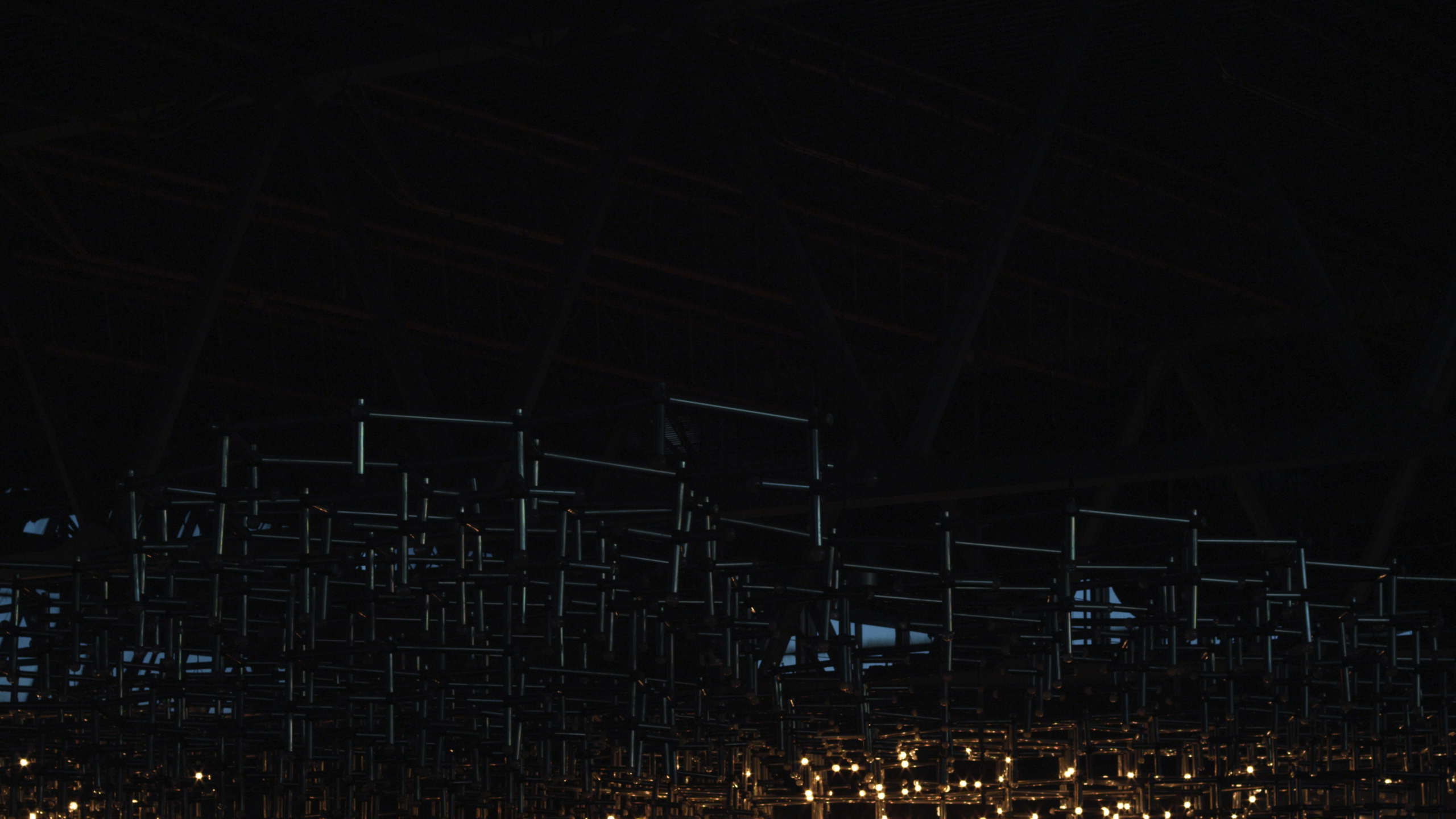
Still from Centar.
For the past fifteen years, post-Yugoslav cinema has seen a surge in themes related to the memory of socialist Yugoslavia. Architecture has been featured among its most consistent themes, as the cineastes of the younger generation revisited ruined hotels, unfinished museums, or abandoned World War II memorials. This presentation zooms in on Ivan Marković’s Centar (2018), a documentary exclusively comprising interior shots of an unnamed monumental building, as if suspended in time. The majority of its spaces seem to have been neglected, yet the maintenance staff continues to clean and vacuum them, polish the surfaces, and repair leakages. The building in question is Sava Centar, a congress space completed in 1978 in Belgrade, Yugoslavia. Designed by the renowned architect Stojan Maksimović to host the Conference on Security and Co-operation and inaugurated by the Yugoslav president Josip Broz Tito, Sava Centar has been the stage of numerous international gatherings, including a summit of the Non-Aligned Movement. At the time of the filming of Centar, however, this landmark of modernist architecture was slowly deteriorating while awaiting privatization. Left in a state of ‘functional decay,’ it met a fate similar to other edifices constructed in the heyday of Yugoslav infrastructure building, only to be neglected by subsequent nationalist regimes. The presentation analyzes Marković’s portrayal of Sava Centar as both a physical illustration of this negligence and a vivid incarnation of the ideological shift from Yugoslav socialism to the present-day compound of Serbian nationalism and neoliberal capitalism. It also demonstrates how Centar offers a conceptually intricate rendering of this building by representing it as a spatial and temporal vacuum, while also providing clues to interpret it as a living organism.
Universidad Torcuato Di Tella, A112
July 30, 11:00-12:30